The explosive ascent of Large Language Models (LLMs) like OpenAI’s ChatGPT, Claude, and GitHub Copilot has triggered existential debates across the software engineering landscape. With AI generating functional Python scripts, debugging WordPress PHP hooks, and synthesizing React components in seconds, many tech leaders and aspiring engineers wonder: Can ChatGPT replace software developers? While AI undeniably automates boilerplate coding and accelerates prototyping, building robust, secure, and production-grade software demands high-level architectural reasoning, human contextual empathy, and deep systems engineering. In this technical breakdown, we examine the true capabilities and limitations of AI in modern web development.
1. The State of AI Code Generation in 2026
Modern LLMs are sophisticated statistical prediction engines trained on billions of lines of public code from repositories like GitHub and Stack Overflow. When you ask ChatGPT to write a WordPress filter or an API endpoint, it predicts the most probable sequence of tokens based on its training distribution. For standardized, repetitive tasks—such as enqueuing a script, regex parsing, or writing unit tests—AI models achieve remarkable accuracy.
However, software engineering is not merely typing syntax; it is understanding messy business constraints, translating stakeholder ambiguity into relational schemas, and architecting fault-tolerant infrastructure. For official perspectives on AI coding integration, explore OpenAI’s Research and Safety Guidelines.
2. Where ChatGPT Excels: Automation & Boilerplate
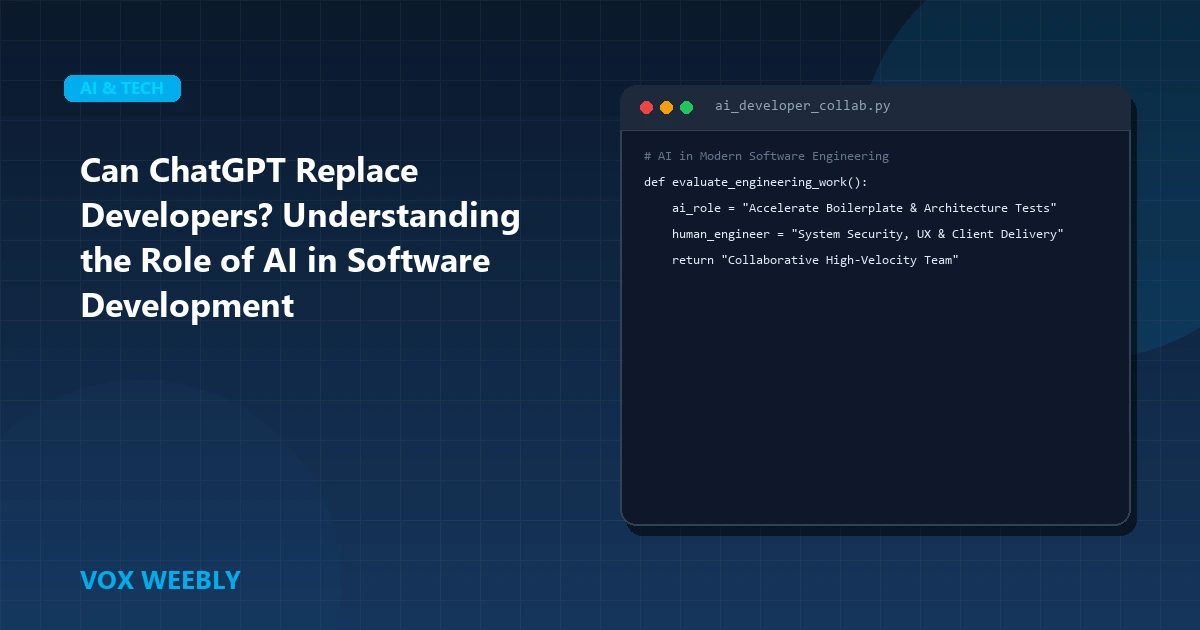
Rather than replacing engineers, ChatGPT functions as the ultimate cognitive multiplier for experienced developers:
- Instant Boilerplate Generation: Creating complex custom post type registrations, database migration scaffolding, or REST API controllers in seconds.
- Rapid Syntax Translation: Converting legacy jQuery snippets into modern vanilla JavaScript or transitioning functions to PHP 8.3 type-hinted syntax.
- Accelerated Debugging: Explaining obtuse stack traces and suggesting edge-case logic checks. If you encounter runtime errors, explore our step-by-step diagnostic guide on troubleshooting common WordPress errors.
3. Fundamental Limitations of LLMs in Software Engineering
Despite impressive demonstrations, AI models suffer from profound blind spots that prevent full autonomy:
- Lack of Real-World System Context: ChatGPT cannot see your live server memory bottlenecks, your Redis object caching topology, or your distributed microservices network unless explicitly spoon-fed.
- Inability to Innovate: LLMs generate solutions based on past training data. When encountering novel architectural problems or zero-day operating system updates, they struggle to formulate innovative solutions.
- Architectural Vision: Choosing between a headless Decoupled architecture vs. a native monolithic child theme requires commercial judgment. Learn how custom themes are properly architected in our beginner’s guide to creating custom WordPress themes.
4. Hallucinations and Hidden Security Vulnerabilities
One of the greatest hazards of blindly accepting AI-generated code is hallucinated or insecure dependencies. Security researchers frequently discover that LLMs generate code containing SQL injection vulnerabilities, unescaped user inputs, or invented package names that malicious threat actors squat on (supply chain poison attacks).
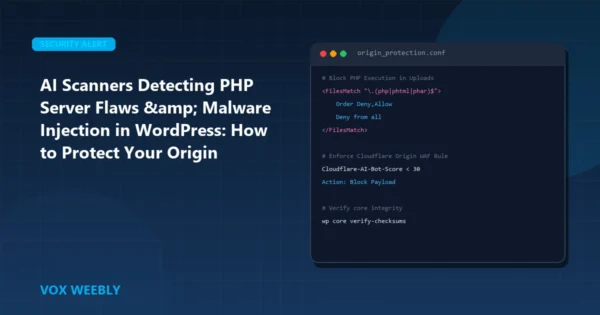
Automated vulnerability bots actively scan the web searching for unhardened server origins. Protect your infrastructure by studying our technical guide on defending WordPress against AI automated scanners and implement strict browser transport rules with our guide on adding HTTP security headers in WordPress.
5. The Rise of the 10x AI-Augmented Engineer
The developer who refuses to use AI tools will inevitably be replaced by the developer who harnesses AI to ship features ten times faster. Senior developers use ChatGPT to eliminate mundane typing, freeing up mental bandwidth to focus on database index optimization, edge caching strategies, and UX design. For Core Web Vitals acceleration, see our benchmarks on disabling lazy loading on hero images.
6. How Developers Can Future-Proof Their Careers
- Double Down on Systems Architecture: Deeply understand distributed databases, server caching layers, and high-concurrency request routing.
- Master Prompt Engineering & AI Orchestration: Learn how to decompose complex business logic into precise context prompts for AI subagents.
- Cultivate Human Soft Skills: Client empathy, product strategy, and technical leadership cannot be automated by neural networks.
Conclusion
In conclusion, mastering can chatgpt replace developers? understanding the role of ai in software development is essential for building a resilient, high-performing WordPress website. By implementing the architectural best practices and configurations covered in this guide, you ensure your platform maintains peak performance, bulletproof security, and seamless user experiences.
Continuously auditing your server configurations, monitoring error logs, and adhering to clean development standards will keep your site reliable as your business scales. Investing in high-performance hosting and modern engineering prevents costly downtime and maximizes your digital investment.
At Vox Weebly, we understand the importance of a fast, secure, and custom-engineered WordPress website, and our team of senior developers can help you build, optimize, and maintain your web platform for maximum performance. Contact us today to learn more about our custom WordPress website development services.
7. Frequently Asked Questions (FAQ)
Will AI make junior developers obsolete?
Junior roles will evolve. Instead of writing basic boilerplate from scratch, junior developers will spend more time auditing AI-generated code, writing automated integration tests, and verifying deployment safety.
Can ChatGPT fix server database crashes?
ChatGPT can suggest diagnostic terminal commands, but safely repairing corrupt tables or resolving memory-exhausted MySQL daemons requires hands-on human intervention. Follow our step-by-step walkthrough on how to fix ‘Error Establishing a Database Connection’ in WordPress.
Ethical AI Governance, Data Privacy & Intellectual Property
As organizations integrate LLMs into commercial development pipelines, understanding intellectual property (IP) boundaries and regulatory compliance (such as GDPR and the EU AI Act) is paramount. When developers feed proprietary customer schemas, private API keys, or enterprise business logic into public AI chat interfaces, that data can be incorporated into model training pools, triggering catastrophic corporate compliance breaches.
Enterprise engineering organizations must mandate local open-source LLMs (such as LLaMA 3 run on private hardware via Ollama or vLLM) or use enterprise API contracts with strict zero-data-retention guarantees. Learn more about ethical AI deployment from the NIST Artificial Intelligence Risk Management Framework.
Continuous Integration (CI/CD) and Automated Unit Testing
The developer of the future spends less time hand-coding repetitive CRUD operations and more time designing automated testing matrices. Modern CI/CD pipelines use GitHub Actions to run automated unit tests (via PHPUnit) and visual regression benchmarks whenever code is pushed, ensuring that AI-assisted features maintain 100% architectural stability before reaching production.