Elementor has fundamentally transformed modern WordPress web development. Powering over 16 million active websites worldwide, this revolutionary drag-and-drop visual page builder enables web designers, digital marketing agencies, and enterprise developers to construct pixel-perfect, responsive digital experiences without writing monolithic CSS stylesheets. From modular Flexbox Containers and CSS Grid layouts to the dynamic Theme Builder and WooCommerce store customizer, Elementor provides an exhaustive design operating system. In this comprehensive technical guide, we break down everything you need to know about Elementor Builder, performance optimization best practices, and workflow secrets.
1. What is Elementor Builder and How Does It Work?
Elementor operates as an intuitive front-end visual editor that executes inside the WordPress admin environment. Unlike traditional editors that require saving drafts and previewing in a separate browser tab, Elementor renders changes in real time. The interface features a fixed left-side editing dock housing three primary tabs: Content (structural text, links, and media), Style (typography, gradients, borders, and animations), and Advanced (margin, padding, CSS transforms, and custom attributes).
For official technical documentation and developer APIs, visit the Elementor Official Help and Documentation Portal.
2. Modern Architecture: Flexbox Containers & CSS Grid
Historically, Elementor utilized legacy “Sections” and “Columns” that created deeply nested <div> structures—a frequent cause of poor Google PageSpeed DOM size warnings. Today, Elementor’s Flexbox Containers and native CSS Grid have revolutionized page construction:
- Reduced DOM Depth: Cuts HTML wrapper nodes by up to 60%, drastically accelerating browser render speeds.
- Fluid Responsive Alignment: Easily control justify-content, align-items, and flex-wrap across desktop, tablet, and mobile viewports.
- Nested Containers: Place containers inside containers infinitely without incurring performance penalties.
To compare Elementor’s layout engine with other major tools, read our detailed comparison on Elementor vs Divi Builder.
3. The Elementor Pro Theme Builder Engine
Elementor Pro’s Theme Builder abstracts website templating out of raw PHP files and into visual design documents. With Theme Builder, you can visually construct:
- Global Headers & Footers: Sticky navigation bars with mobile slideout hamburger menus.
- Single Post & Page Templates: Dynamically displaying Post Titles, Featured Images, Reading Times, and Author Bios using custom field tokens.
- Archive Templates & 404 Pages: Dynamic query grids with custom pagination.
For projects requiring custom code rather than builder abstraction, explore our beginner’s guide to handcrafting custom WordPress themes.
4. Building Custom WooCommerce Storefronts
Elementor Pro empowers e-commerce agencies to completely redesign WooCommerce without touching template PHP files. Drag-and-drop custom widgets for Product Images, Add to Cart buttons, Upsell Grids, and Product Star Ratings allow you to create high-converting product pages tailored to your brand identity.
5. Speed Optimization: Eliminating DOM Bloat
To ensure your Elementor site achieves 90+ scores on Google PageSpeed Insights:
- Enable Elementor Experiments: Under Elementor > Settings > Features, activate Inline Font Icons, Optimized DOM Output, and Improved Asset Loading.
- Avoid Over-Nesting Containers: Keep layout structures lean and rely on CSS flex gaps rather than excessive margin and padding wrappers.
- Optimize Hero Banners: Disable native lazy loading on above-the-fold banners to supercharge Largest Contentful Paint (LCP) as described in our guide on disabling lazy loading in WordPress.
6. Elementor vs. Traditional Theme Hand-Coding
While Elementor enables rapid development and empowers non-technical marketing teams to publish landing pages independently, large-scale web applications often benefit from bespoke hand-coded themes. Learn about child theme overrides in our guide on how to create a WordPress child theme, and review technical search practices in our guide on optimizing WordPress for SEO.
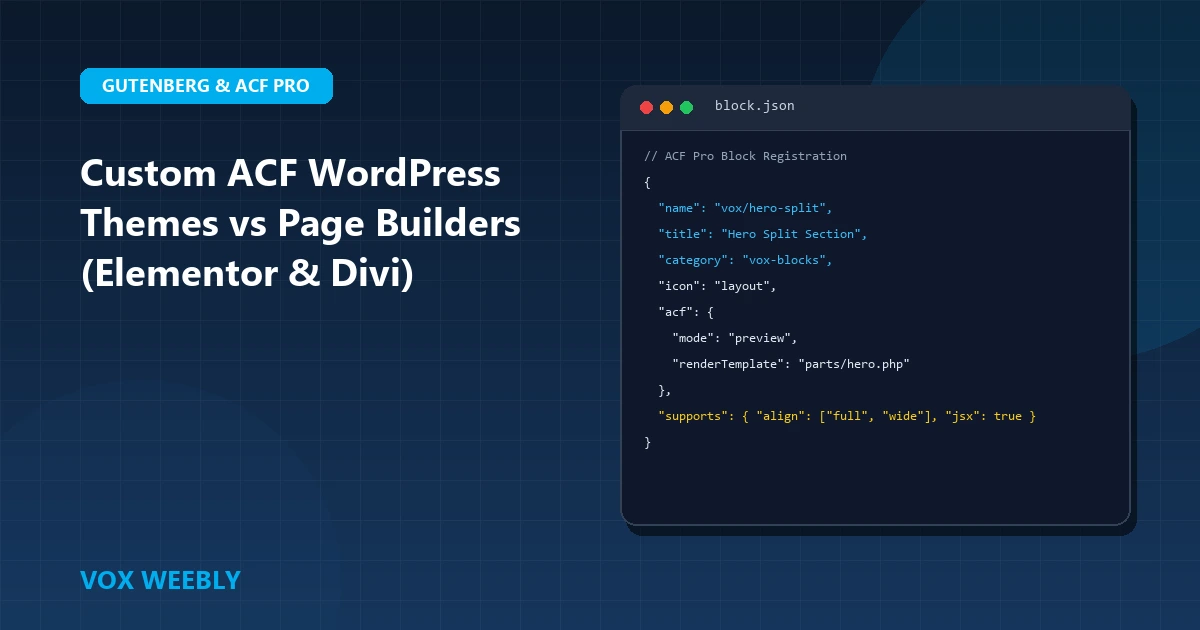
When to Migrate from Elementor to Custom ACF Block Architecture
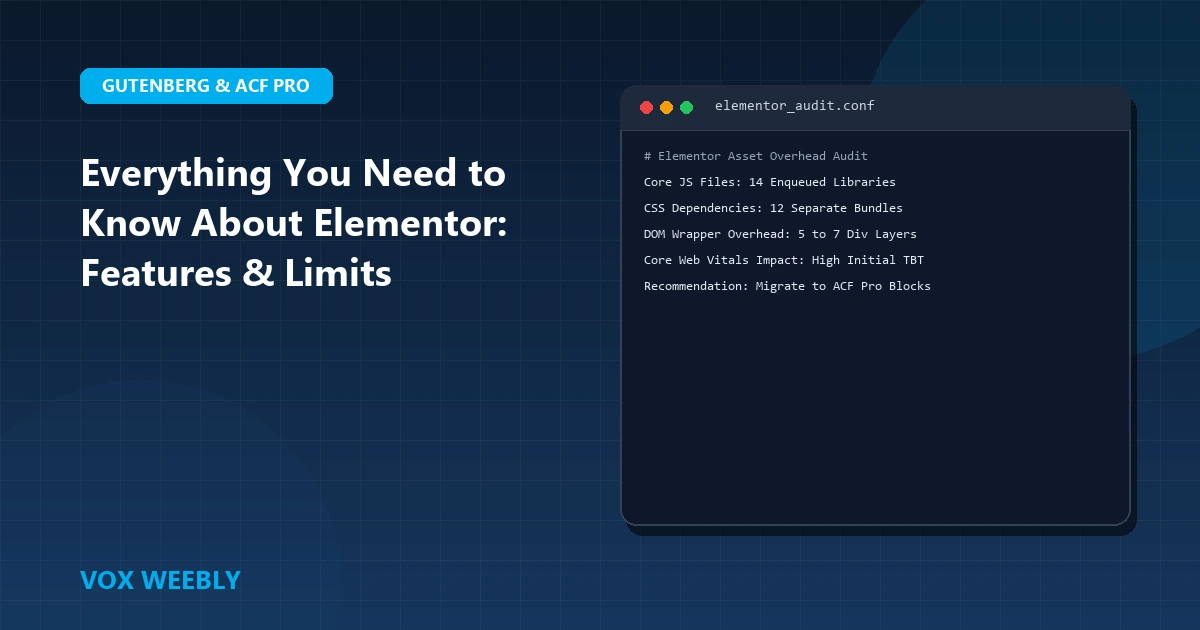
While Elementor provides visual design agility for early-stage websites, enterprise organizations frequently reach an architectural plateau as content volume and traffic scale. Page builders inevitably incur technical debt in the form of deep DOM tree nesting, multiple bundled JavaScript libraries (Swiper, Waypoints, jQuery), and render-blocking CSS files that can drag mobile Google PageSpeed scores into the 50s and 60s.
Transitioning from Elementor to a custom Advanced Custom Fields (ACF) block theme delivers substantial engineering benefits:
- 95+ Core Web Vitals Out of the Box: Custom ACF themes output clean, semantic HTML5 markup with zero wrapper divs and conditionally loaded CSS. This results in sub-second mobile page loads and perfect Core Web Vitals compliance without requiring complex caching hacks.
- Streamlined Editorial Workflows: Content editors work within native WordPress Gutenberg blocks restricted to your company’s exact brand typography, colors, and layout rules. This eliminates accidental layout breaks or inconsistent styling across marketing pages.
- Long-Term Codebase Maintainability: Hand-coded ACF themes rely purely on standard PHP templates and modern CSS. There are no third-party visual builder database shortcodes, making future migrations, redesigns, and automated testing seamless.
Conclusion
In conclusion, mastering everything you need to know about elementor builde is essential for building a resilient, high-performing WordPress website. By implementing the architectural best practices and configurations covered in this guide, you ensure your platform maintains peak performance, bulletproof security, and seamless user experiences.
Continuously auditing your server configurations, monitoring error logs, and adhering to clean development standards will keep your site reliable as your business scales. Investing in high-performance hosting and modern engineering prevents costly downtime and maximizes your digital investment.
At Vox Weebly, we understand the importance of a fast, secure, and custom-engineered WordPress website, and our team of senior developers can help you build, optimize, and maintain your web platform for maximum performance. Contact us today to learn more about our custom WordPress website development services.
7. Frequently Asked Questions (FAQ)
Is Elementor free?
Yes. The core Elementor plugin is completely free and includes over 30 basic design widgets. Elementor Pro unlocks the Theme Builder, WooCommerce Builder, Popup Builder, and dynamic custom field integrations.
What should I do if Elementor fails to load or times out?
If Elementor encounters infinite loading screens or database timeouts during saves, allocate at least 256MB of PHP memory in wp-config.php and follow our troubleshooting guide on fixing database connection errors in WordPress.